|
| The traditional cotton Chipa block printers of Rajasthan have a saying, “Jisme rang hai usme dawai hai.” – “Whatever contains colour contains medicine”. When dyed cotton fabric is worn, the dye desorbed from the fabric can be absorbed by the skin in a similar way to the patches now used by allopathic doctors and can deliver vital benefits. |
| Our principal colours and mordant (substance that fixes dye to yarn) are all listed as medicinal sources in the Charaka Samhita, the earliest record of Ayurvedic medicine, which was composed around the 2nd century A.D. from earlier material dating in part to the 5th century B.C. Continuous use in medicinal formulations, taken internally or applied to the skin, for two thousand years is strong evidence of the safe, health-promoting, non-toxic nature of these plants.
|
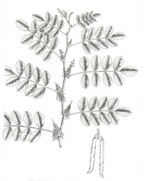
Indigo (blue): Charaka mentions indigo as a purgative and for treating fever. The Bhavaprakashanighantu, the 16th century Indian Materia Medica of Shri Bhavamishra mentions that indigo tastes pungent, is good for colour and growth of hair, removes swoon and illusion and generates heat. It is prescribed for: abdominal diseases, spleen-diseases, intoxication and poison.
Dr. Mahendra Singh Naggar, Director (Culture) of the Mehrangarh Museum Trust and Maharaja Mansingh Pustak Prakash Research Centre, Jodhpur, provides an insight into an unusual use of indigo in Jodhpur to save a woman from sati. She would be in a trance-like state as she walked in the procession to the funeral pyre of her husband. By sprinkling her with indigo, her birth family or children, not wanting to lose her, could bring her back to normal so she would lose her determination to commit sati.
Also according to Dr. Naggar, indigo was added to the usual lime wash used to paint houses in Jodhpur, once known as the blue city, to ward off mosquitoes.
|
|
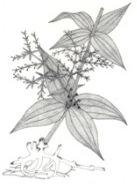
Manjistha (scarlet red and pink): In Ayurveda, manjistha (Indian madder) is known as one of the best blood-purifying herbs. Studies have shown that it regulates blood pressure and blood vessel constriction, and helps prevent formation of blood clots. The herb supports the natural functions of the lymphatic system, allowing optimal nutrition to reach the cells and helping to remove wastes from the body.
Manjistha is also used to treat raised uric acid levels, arthritis associated with gout, glandular swellings, recurring skin infections and other skin diseases such as pigmentation anomalies and leucoderma. The herb works very well both internally and externally to promote skin glow and lustre. It also helps remove pimples, freckles and other discolorations, and promotes the healing of damaged skin.
|
 |
|
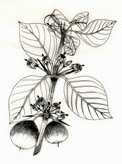
Helu - Meyna laxiflora (yellow): Called Pindi or Pinditaka in Ayurveda, the leaves were used for diphtheria while the fruit was considered strengthening and cooling, and a useful expellant of phlegm and bile. |
|
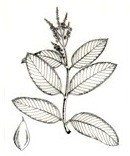
| Harda (mordant): Harda (Chebulic myrobalan) is one of the most versatile of Indian trees, with many medicinal uses and an essential role in the mordant complex used for all natural dye colours except indigo. In its role as a mordant, with alum, it gives anti-microbial properties to the fabric and prevents body odour. In Ayurveda, it is an ingredient of triphala, the ancient tonic prescribed frequently in the Charaka Samhita, and still widely used today. The medicine Buddha in Tibetan depictions is shown holding this plant in his right hand. Siddha practitioners recommend taking it every evening to ensure long life. Alone or in combination it is used to control everything from acidity, heartburn, flatulence, ulcers, diarrhoea/dysentery, constipation, stomach bleeding and mouth ulcers to skin blemishes and hair loss.
In dyed fabric, the myrobalan tannin binds various harmful air-borne pollutants, preventing them from being absorbed by the skin.
|
Lac (crimson red and pinks): known in Sanskrit as laksha, it is a traditional ayurvedic remedy, considered tonic for the liver, stomach and intestines and, with other herbs, an aid against obesity. It is also found in preparations for nose bleed. Based on ayurvedic principals, a contraceptive pill recently developed includes lac as one of four ingredients; clinical trials have shown it to be as effective as the steroidal pill or the IUD, and without any side effects or reduction in ability to conceive when use is discontinued.
Ferrous acetate (black): the traditional black dye of India, kasimi is a simplified version of the ayurvedic tonic, lauhadi rasayana, mentioned in the Charaka Samhita. According to Gurappa Chetty (Shilpguru and Padma Shree) the leading exponent today of the Srikalahasti Kalamkari tradition of natural dye painting on cotton, kasimi was earlier used as an iron tonic by village women. The kasimi had to be taken by a spoon from the fermentation jar before any hand had touched it. |
References:
Pandey, ed. (7th ed. 1986) Bhavaprakashanighantu, of Shri Bhavamishra. [16th century Indian Materia Medica] comm. Dr Chunekar. Varanasi
Caraka Samhita (7th ed. 2001) 2 vols. Ed. & Tr. Priyavrat Sharma. Varanasi: Chaukhambha Orientalia. Indigo: vol. 1, pp 387-388 (Vi. 8.136), vol. 2 p 82 (Ci. 3.299); Manjistha: vol. 1, pp 22, 26 (Su. 3.27, su. 4.8, 16, 39); Myrobalan: vol. 2 pp 5-6, 108-109 (Ci. 1.25-34, Ci. 5.105-109); Kasimi: vol. 2, p. 22 (Ci. 1.3.15-23)
Kirtikar KR & Basu BD (1918; 2nd ed. 2003) Revised: Blatter E, Caius JF, Mhaskar KS. Indian Medicinal Plants with Illustrations. 11 vols. Dehra Dun: Oriental Enterprises, vol. 6 pp 1778-1780 (Helu)
The Wealth of India: A Dictionary of Indian Raw Materials and Industrial Products. (1948-1976; rev. ed 1985 1998) vols. I XI with supplements. New Delhi: CSIR, vol. 6, pp 353-354 (Helu)
Palep HS & Jukar SR (2003) Effectiveness of indigenous oral contraceptive. Bombay Hospital Journal. 45(2) pp 310-312 (Lac)
(Lac - massage oils)
(Lac - nosebleed)
|
|
 |
|